

If you’ve spent any time around trailers, you’ve probably heard the term “drop-deck trailer.” It sounds simple, but depending on who you ask, it can mean very different things.
In this blog, we’ll break down the two most common definitions, explain why the confusion exists, and help you determine which type of trailer is right for your needs.
Drop-Deck (Step Deck) Semi Trailers
In the most widely accepted industry definition, a drop-deck trailer, also known as a step deck, is a semi-trailer with two deck levels.
These trailers are pulled by semi-trucks and feature:
- A higher front deck near the truck
- A lower rear deck that “drops” down after the first section
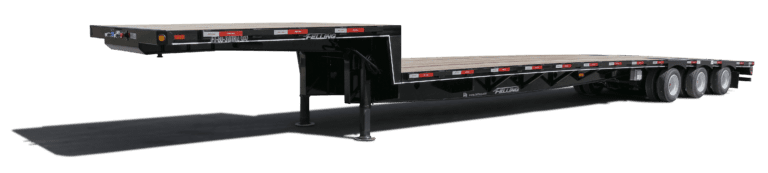
This stepped design allows operators to haul taller equipment that wouldn’t fit on a standard flatbed due to height restrictions.
Common uses include:
- Construction equipment
- Large machinery
- Industrial components
Because of their size and capability, many people automatically associate the term “drop-deck trailer” with these large semi-trailers.
Ground-Level Loading Trailers
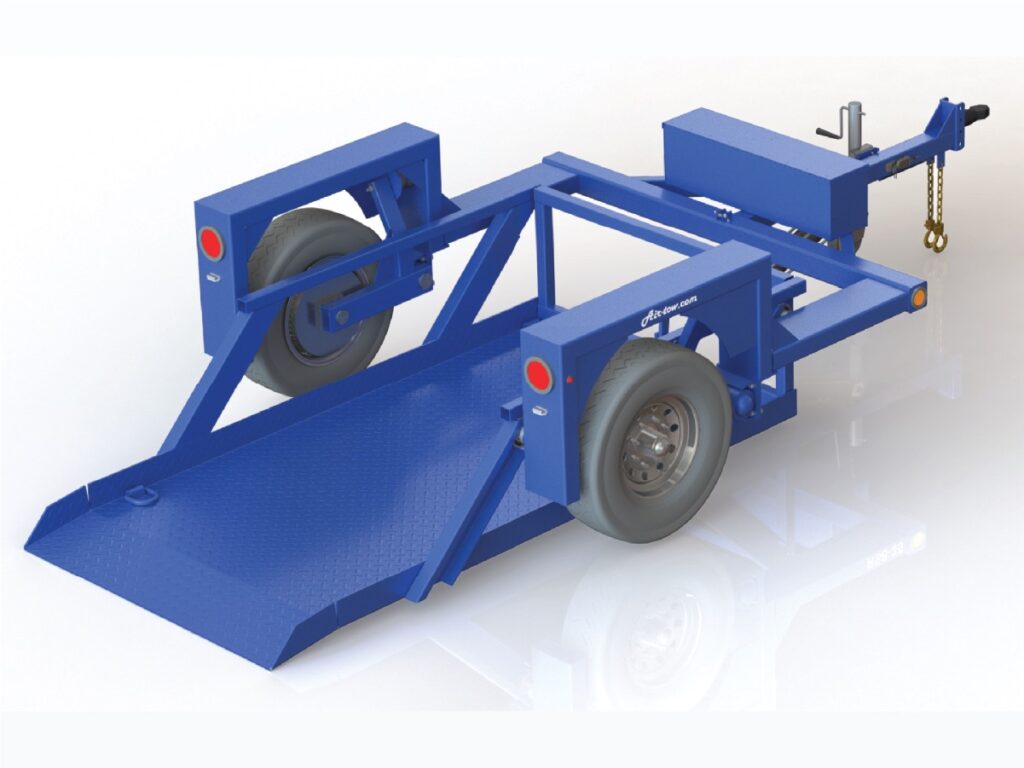
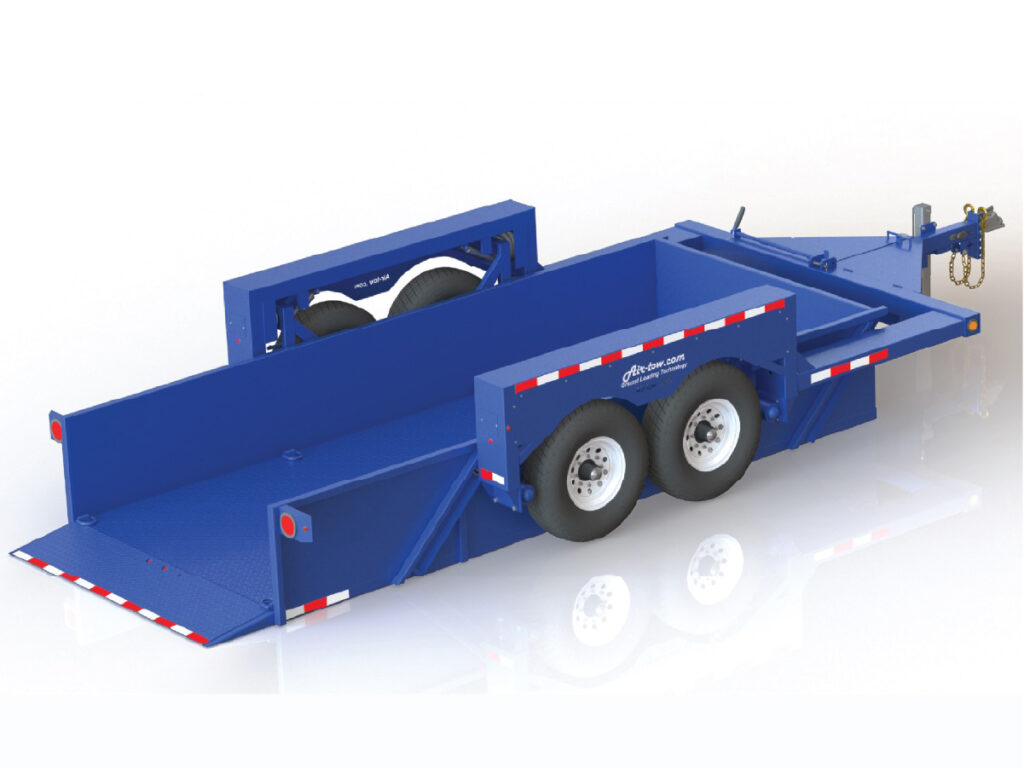
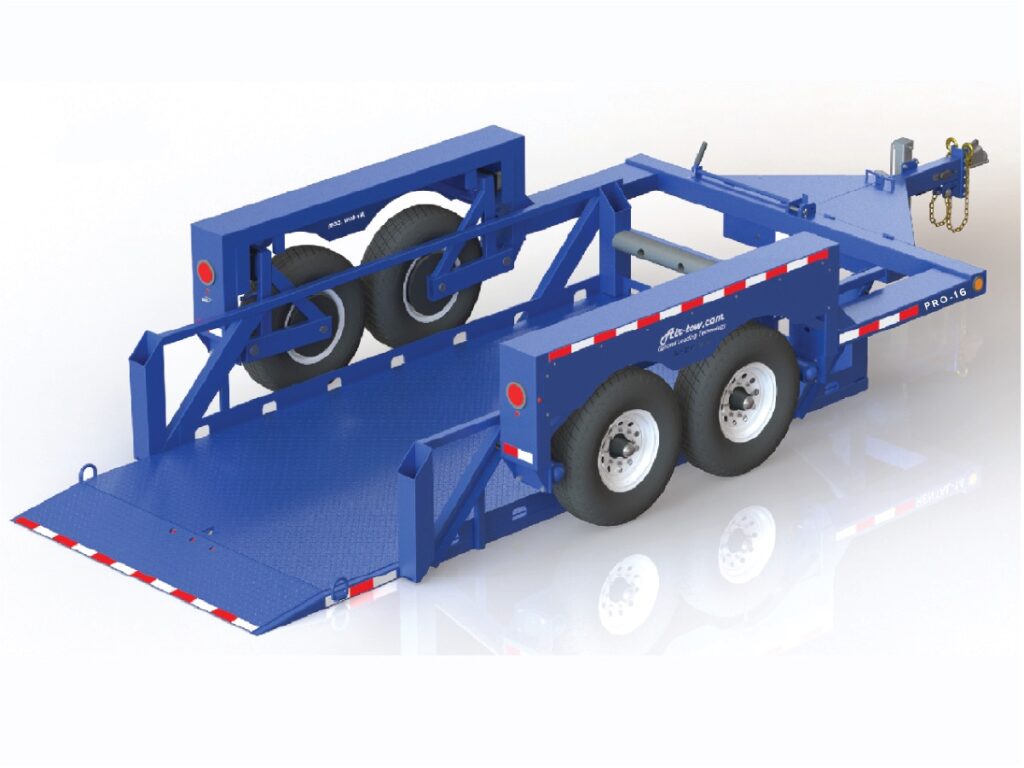
In many industries, especially construction, rental, and equipment transport, the term “drop-deck trailer” is also used more loosely to describe trailers that lower their deck all the way to ground level.
Instead of a fixed “step” like a traditional semi-trailer, these trailers are built around function, making loading and unloading faster, safer, and easier.
With this style of trailer, you can:
- Lower the deck completely to the ground
- Eliminate the need for ramps
- Load equipment with minimal effort and risk
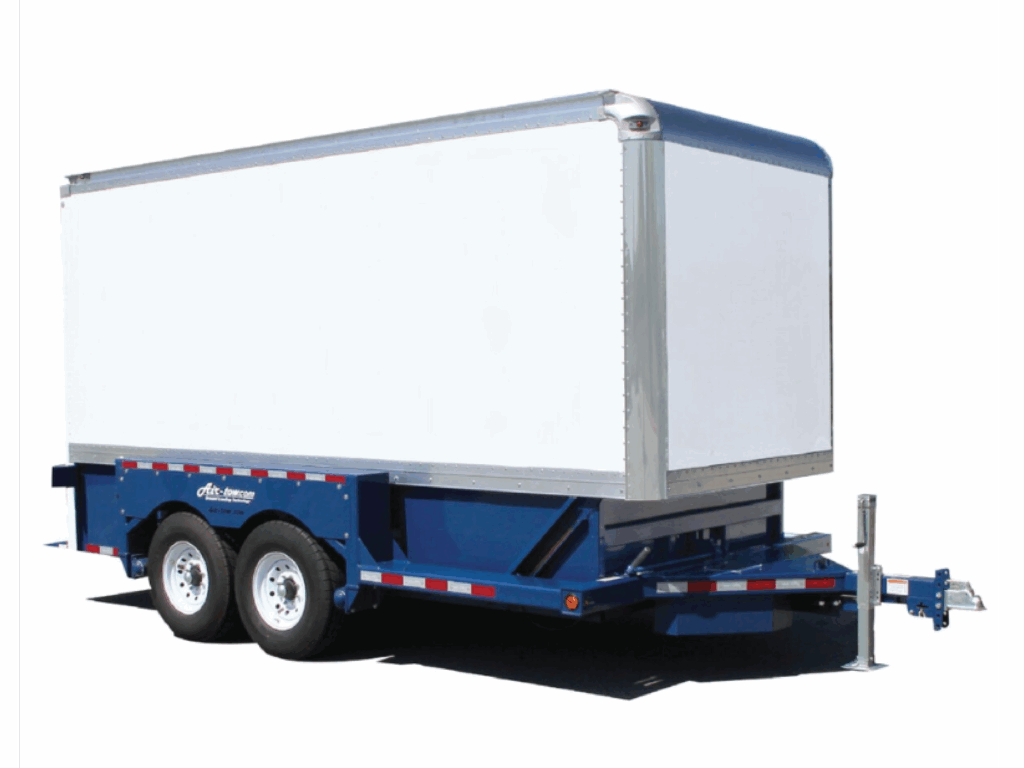
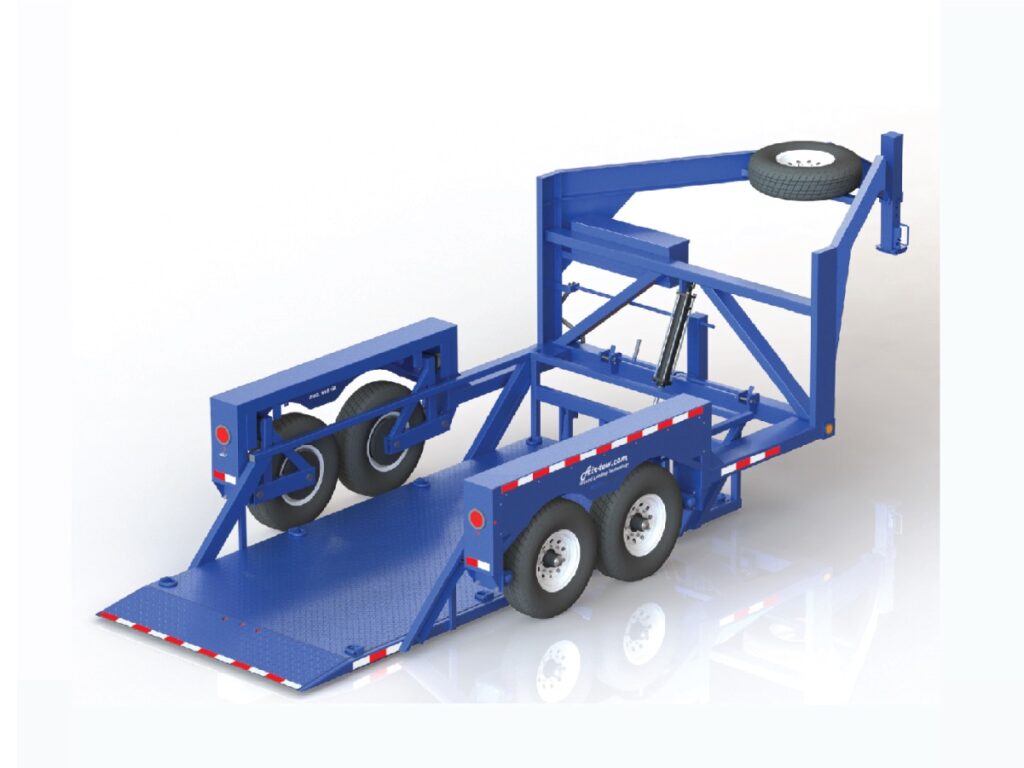
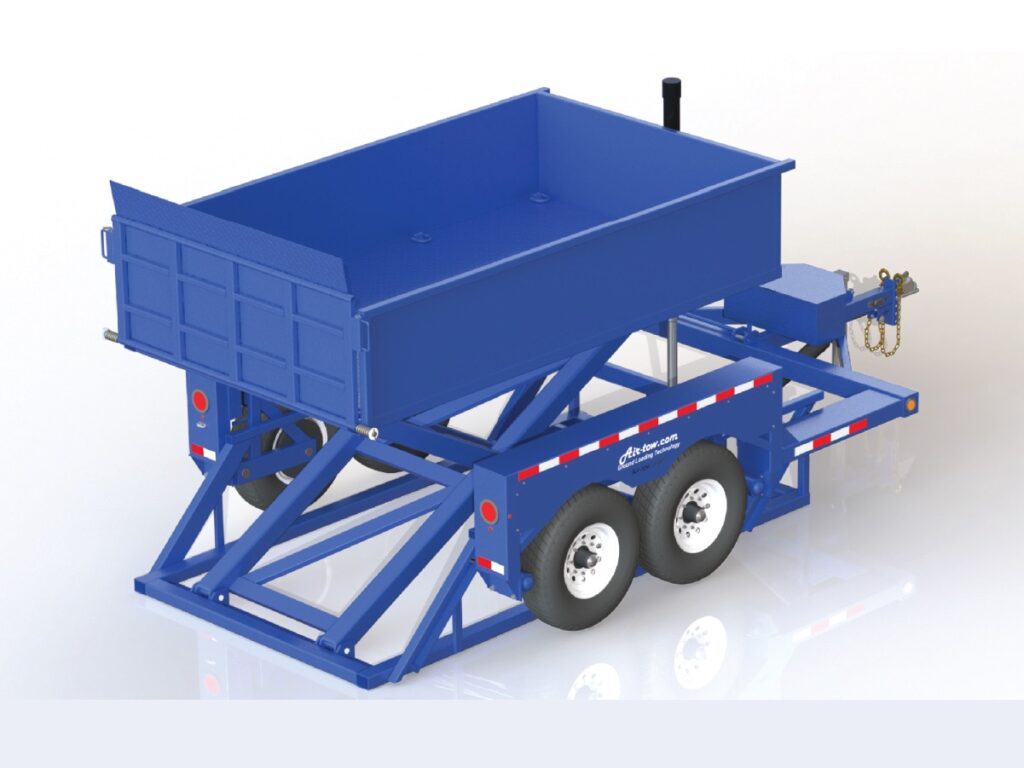
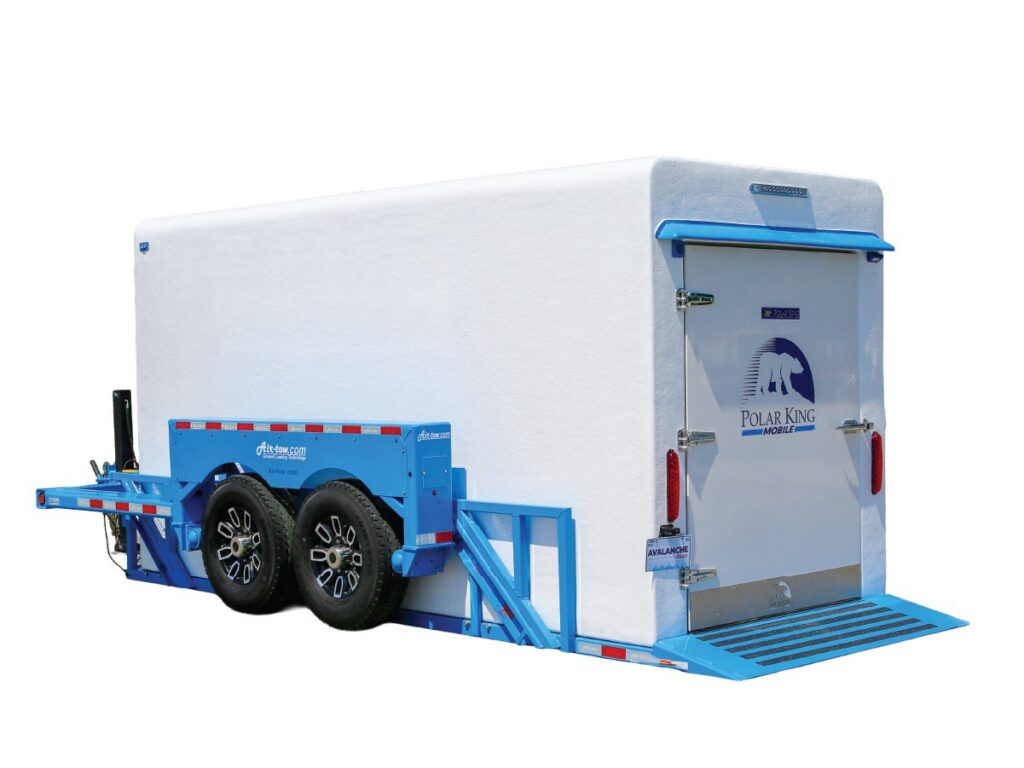
Air-tow Trailers are often referred to as drop-deck trailers because of their ground-level loading capability. The technology behind them is entirely different from that of a traditional step deck. Using a patented system, Air-tow Trailers can:
- Raise and lower the entire deck hydraulically
- Sit flat on the ground for safe, level loading
- Eliminate steep and dangerous loading angles
- Improve jobsite efficiency and operator safety

This design makes them an ideal solution for hauling:
- Scissor lifts
- Floor scrubbers and sweepers
- Safes
- Vending machines
- Concrete barriers
- Small equipment and machinery
So while they don’t “drop” in the same way a semi-trailer does, they accomplish the same goal, making equipment easier and safer to transport. Additionally, the largest Air-tow deck is 16” long and has a 14,000 lbs capacity. This is much less than step-deck trailers, making Air-tow more suitable for loading this type of equipment.
Why the Confusion Exists
The confusion around the term “drop-deck trailer” comes down to form versus function.
- In the trucking industry, the term refers to the stepped-deck design of the trailer.
- In the equipment and rental industries, it often refers to the function of a trailer that “drops” for easier loading.
Both interpretations are valid, but they describe very different solutions to different hauling challenges.
Which Type Is Right for You?
Choosing the right type of drop-deck trailer depends on how you plan to use it.
- If you’re hauling large, over-height loads across long distances, a traditional step deck semi-trailer is likely your best option.
- If you’re frequently loading and unloading equipment at ground level, especially without access to docks or forklifts, a ground-level loading trailer offers a major advantage.
Understanding your workflow is key to making the right investment.
Ready to Simplify Your Loading Process?
If you’re tired of dealing with ramps, steep loading angles, and time-consuming setups, it may be time to rethink your trailer.
Air-tow Trailers are designed to help you:
- Save time on every load
- Reduce the risk of accidents
- Improve overall efficiency
Find your nearest dealer or request a quote today.
Frequently Asked Questions
What is the main difference between a drop-deck and a step-deck semi-trailer?
A drop deck trailer has a lowered main deck for hauling taller equipment, while a step deck trailer features two distinct levels for added height clearance within legal limits. Both are designed for oversized loads, with the difference being how each creates that extra vertical space. However, in other industries, “drop-deck” can also refer to trailers that lower flat to the ground.
Do ground-level loading trailers require ramps?
No. Trailers like Air-tow eliminate the need for ramps by lowering the deck directly to the ground.
What equipment works best with ground-level loading trailers?
Scissor lifts, floor scrubbers, and any heavy, low-clearance equipment are all ideal.
Are these trailers safer than traditional ramp trailers?
They can be significantly safer because they reduce loading angles and minimize the risk of equipment tipping or slipping.
Where can I learn more or purchase one?
Visit https://airtow.com/ or find a dealer here: https://airtow.com/find-a-dealer/