

If you’ve seen a line of mobile barriers at a festival entrance, along a roadway, or around a construction zone, you already know one thing: they’re built to move, but not always easy to transport. That’s exactly the challenge. While their modular design makes them ideal for rapid deployment, their size, weight, and volume can still make handling them inefficient without the right setup.
With mobile barriers needing to be moved frequently and quickly, having the right transport solution is critical, and that’s where Air-tow Trailers make the difference.
Just How Heavy Are Mobile Barriers?
Depending on the type and material, individual sections can weigh anywhere from 200 to over 1,000 pounds when empty. Once filled with water or ballast, that weight increases significantly.
Steel barrier systems and reinforced units can weigh even more, especially when designed for high-security applications.
And just like concrete barriers, you’re rarely moving just one. Transporting multiple sections quickly adds up to several thousand pounds of equipment per trip.
Where You See Mobile Barriers Every Day
Mobile barriers are rapidly becoming the go-to solution across industries thanks to their flexibility and speed of deployment. You’ll commonly find them in:
- Festivals, concerts, and large public events for crowd control
- Temporary road closures and traffic redirection
- Emergency response situations and rapid deployment zones
- Construction sites that require frequent reconfiguration
- Security perimeters for public spaces and infrastructure
Unlike permanent concrete setups, mobile barriers are designed to be moved frequently, making efficient transport a top priority.
The Challenge: Moving Them Quickly and Safely
Crews often need to:
- Load and unload multiple sections in tight timeframes
- Reposition barriers frequently throughout a project or event
- Handle awkward shapes or interlocking designs
- Work in busy or high-traffic environments
Traditional trailers with ramps or tilt decks can slow this process down. They introduce angles, increase the risk of shifting, and make repeated loading and unloading more difficult than it needs to be.
When speed matters, inefficiencies add up fast.
Why Air-tow Is the Ideal Solution
1. True Ground-Level Loading
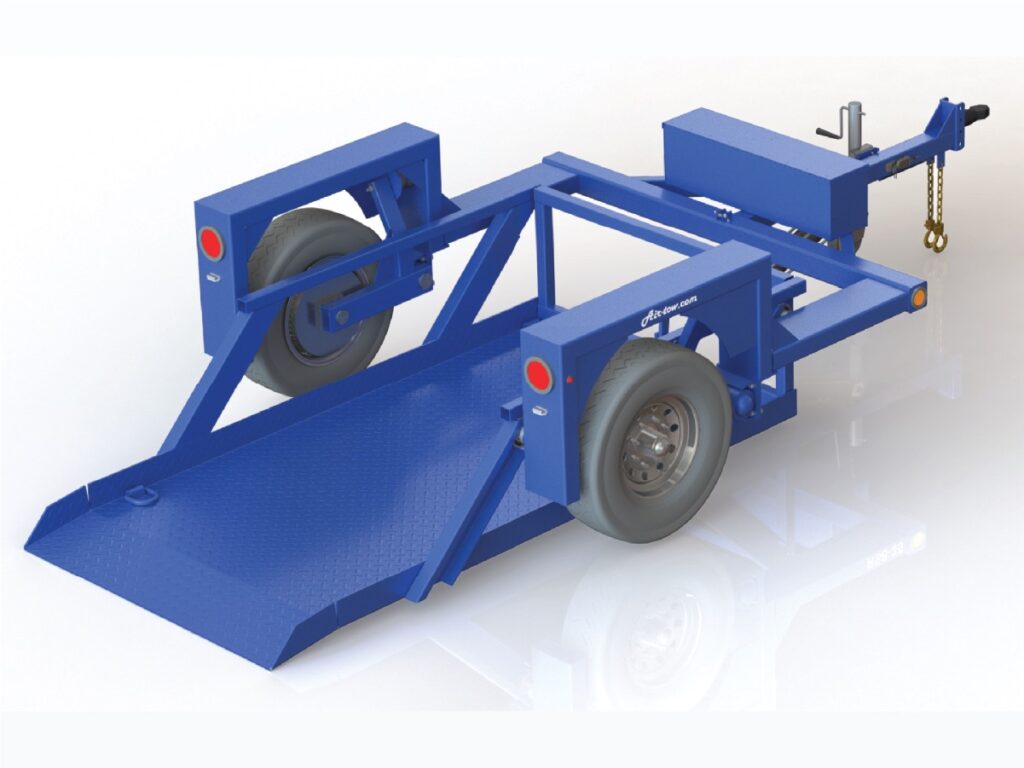
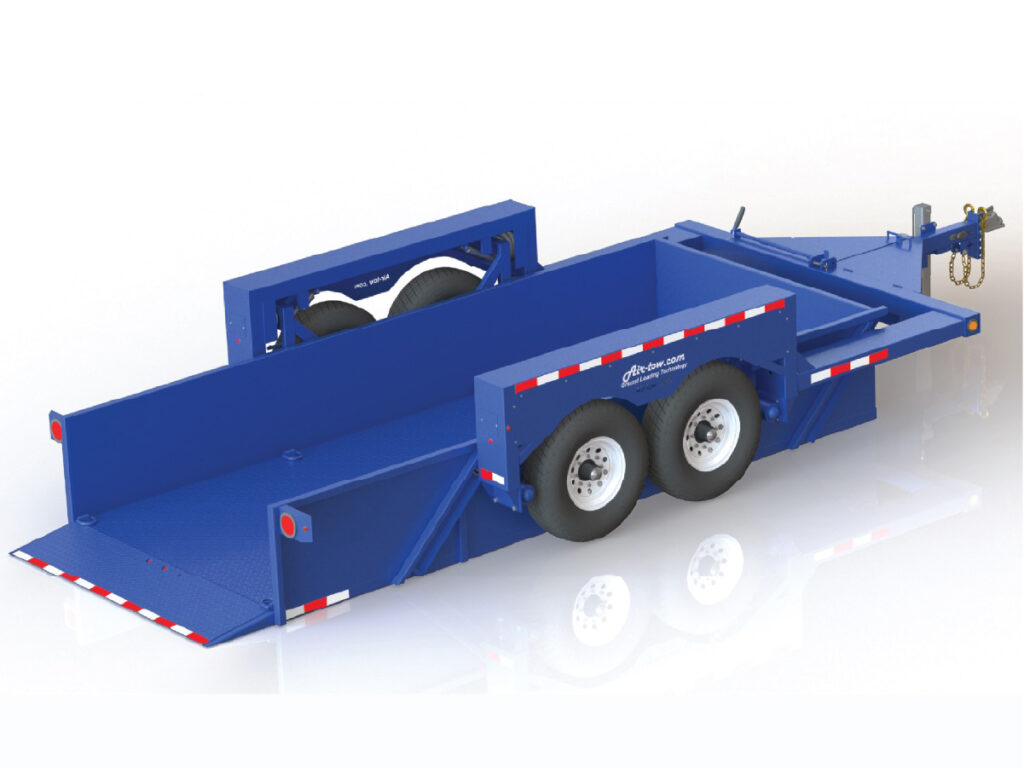
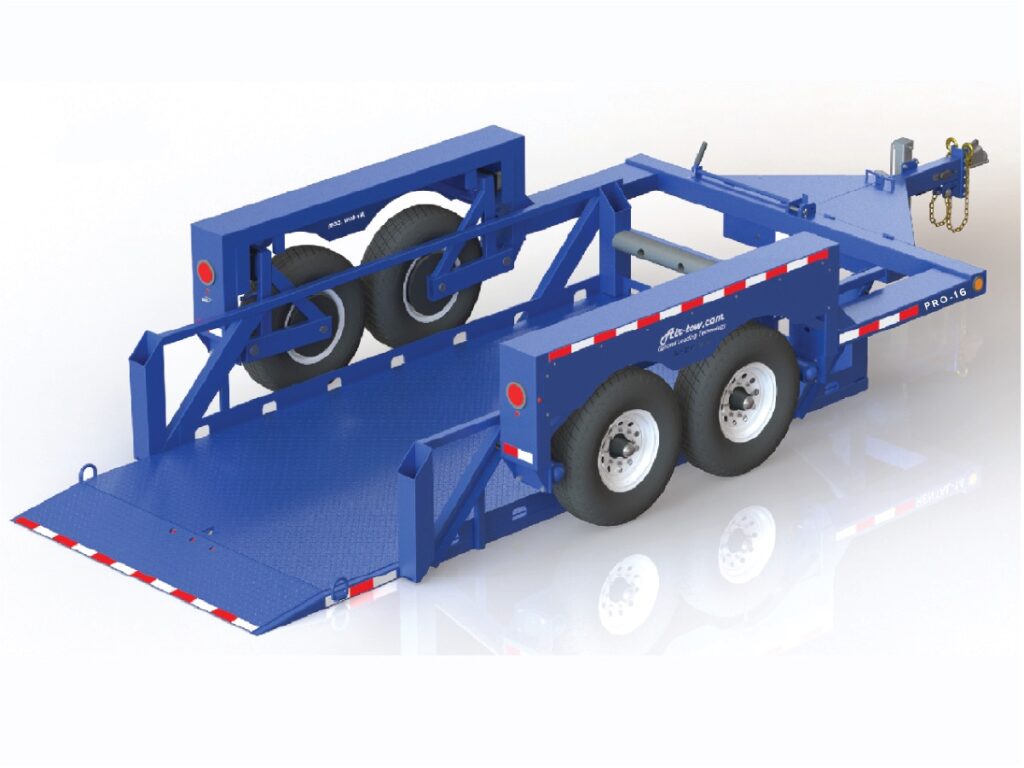
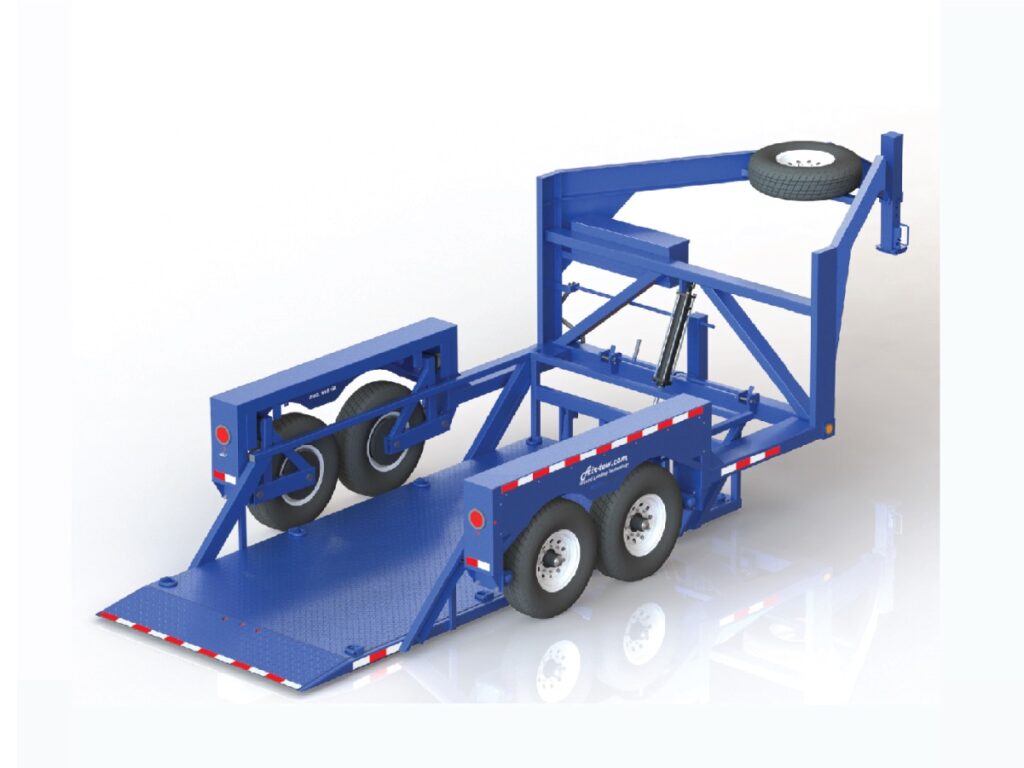
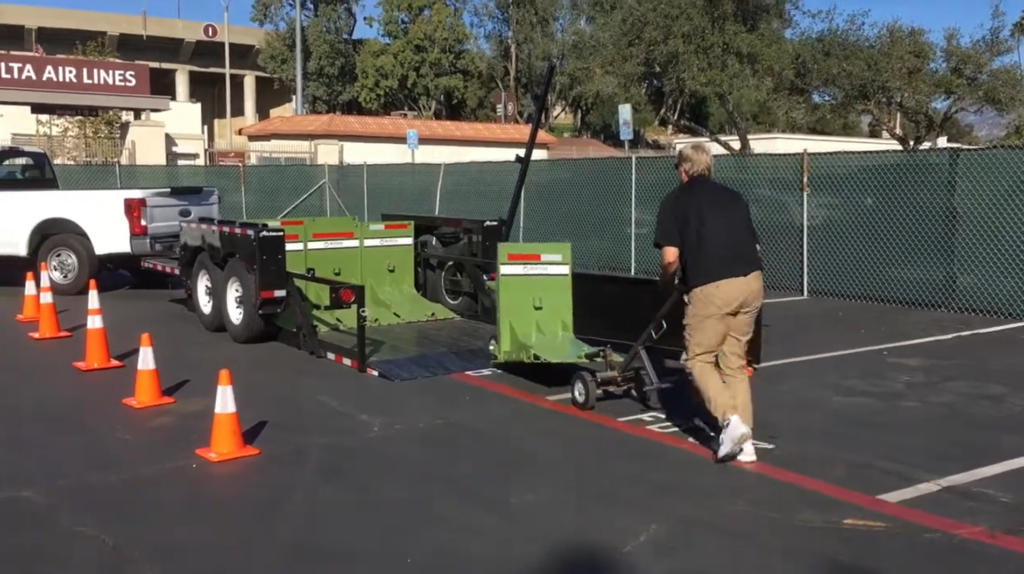
Air-tow trailers lower completely to the ground, making it easy to roll, slide, or place mobile barrier sections without dealing with ramps or steep angles. For crews moving barriers all day, this is a major time-saver.
2. A Completely Flat Deck
From ground level to transport height, the deck stays perfectly flat. That means once your barrier sections are loaded, they stay exactly where you put them, no shifting, no sliding, no repositioning.
3. Built for Repeated Use
Mobile barriers are all about frequent movement, and Air-tow is built for it. The durable steel construction handles repeated loading cycles and heavy use without slowing you down.
4. Faster Deployment on Site
Whether you’re setting up for a concert or redirecting traffic, time is critical. Air-tow reduces loading and unloading time so crews can deploy barriers faster and keep operations running smoothly.
5. Enhanced Safety for Crews
With no ramps and no deck tilt, operators work on a stable, predictable surface every time. There’s no need to push heavy barrier sections up an incline, which significantly reduces physical strain on crews. It also lowers the risk of slips, shifting loads, and injuries during repeated loading and unloading.
Why Customers Choose Air-tow for Mobile Barrier Transport
For companies that rely on mobile barrier systems, efficiency is everything. Air-tow helps teams:
- Move more barriers in less time
- Reduce manual handling and fatigue
- Improve jobsite safety
- Eliminate the hassle of ramps and uneven loading
- Keep operations running on schedule
From event crews working overnight setups to municipalities managing traffic control, the ability to load quickly and move safely is a game-changer.
Final Thoughts
Mobile barriers are designed for flexibility, but transporting them shouldn’t slow you down. With Air-tow’s ground-level loading and stable deck design, moving barrier systems becomes faster, safer, and far more efficient.
Ready to Move Mobile Barriers the Smarter Way?
If your team regularly transports mobile barrier systems, upgrading your trailer can dramatically improve efficiency and safety.
Air-tow Trailers are built to handle high-frequency loading without the headaches of ramps, shifting loads, or wasted time.
Have questions or want to see which model fits your needs?
> Contact our team today to talk through your application and get expert guidance.
> Or find a dealer near you to see an Air-tow trailer in person and get started right away.
Frequently Asked Questions
- How many mobile barriers can an Air-tow trailer carry?
It depends on the model and the size/weight of each barrier section. Many customers can transport multiple units per trip. Match the trailer’s GVWR to your total load. - Do I need special equipment to load mobile barriers onto an Air-tow?
In many cases, no. For heavier steel or ballasted units, a dolly may be used—but Air-tow eliminates the need for ramps and excessive lifting height. - Will the barriers shift during transport?
No. The deck stays completely flat from loading to transport height, and the independent axle and suspension system help keep loads stable during transit. With proper tie-down techniques, your barriers stay secure throughout the journey.